Most of us think about food safety when choosing vegetables, meat, fruit or other ingredients. We check freshness, appearance, smell and expiry dates. But there is another part of the food-safety picture that receives much less attention: what happens after food enters our kitchen?
Fresh produce and raw foods can carry microorganisms from farming, transportation, markets, handling and storage. At the same time, the surfaces and equipment that come into contact with our food should themselves be suitable for food contact.
That creates two separate but related questions:
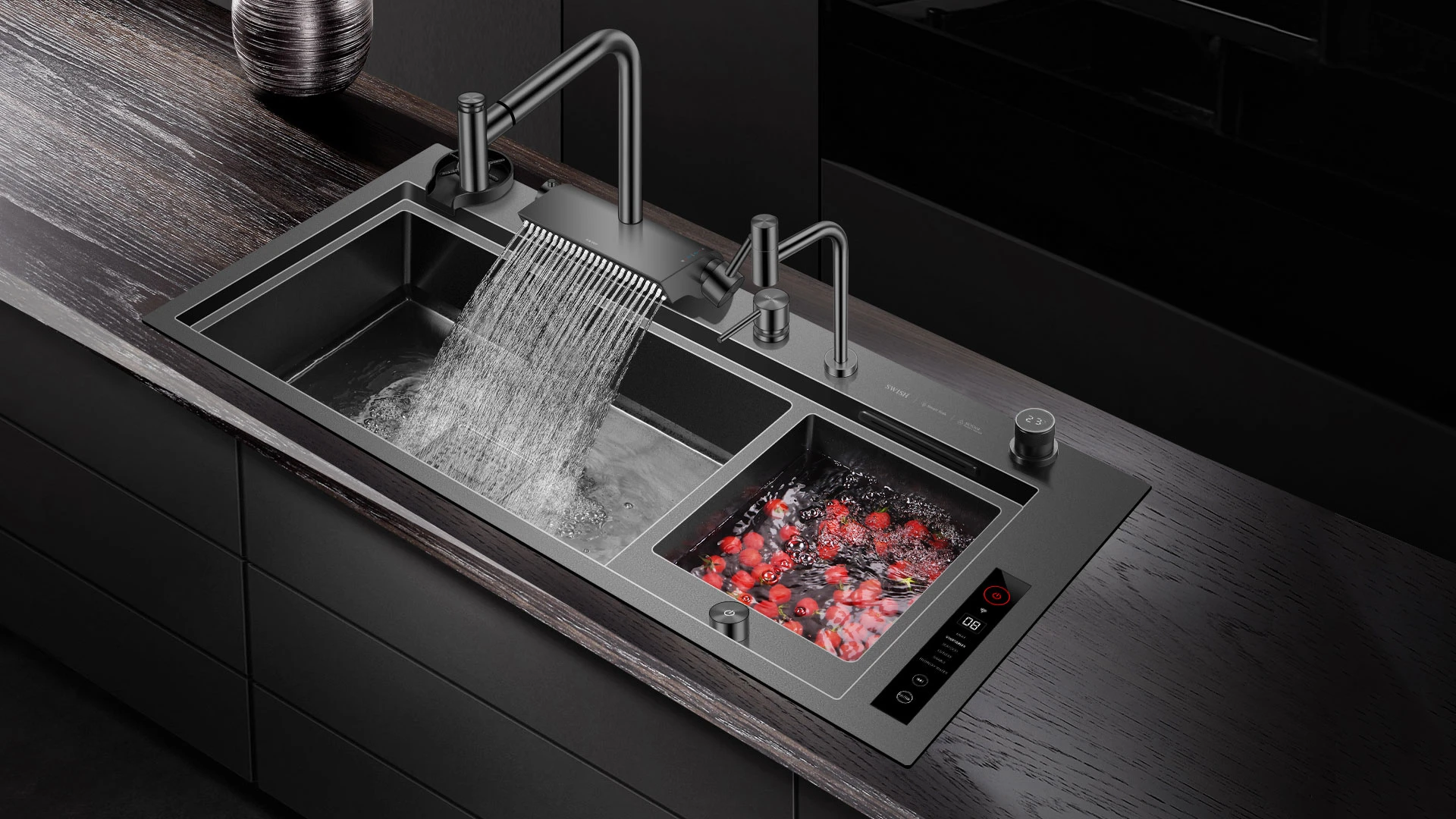
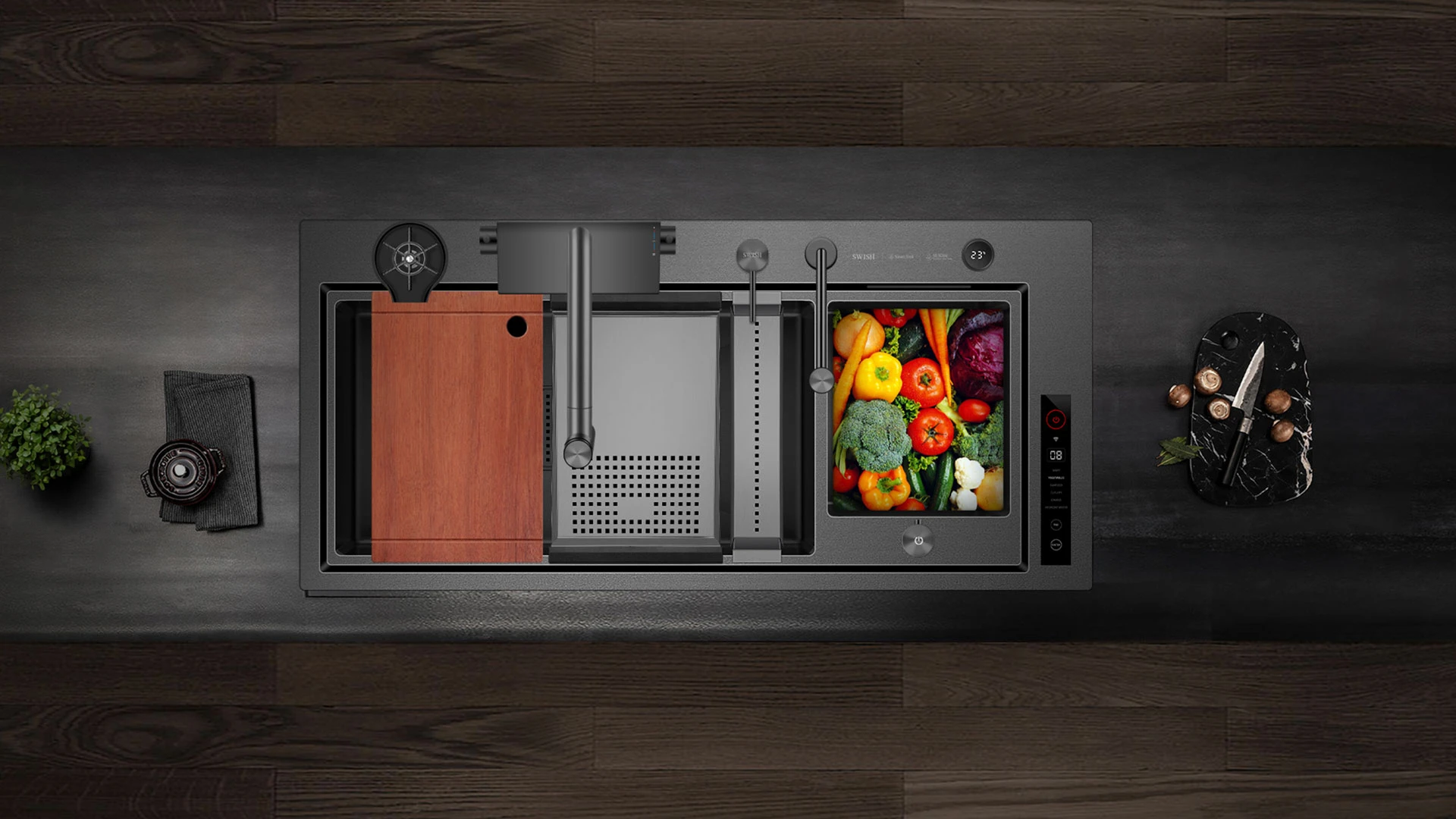
These questions are particularly relevant to the SWISH Hydro Purification Sink because SWISH has commissioned laboratory testing in both areas: food-contact material testing and antimicrobial performance testing.
But laboratory certificates become much more meaningful when we understand the wider science behind them.
This article therefore examines SWISH’s test results alongside published scientific literature, not to claim that a kitchen can ever become completely germ-free, but to understand why material safety and microbial control matter in the first place.
A kitchen sink routinely comes into contact with vegetables, fruits, dishes, utensils, water and food-preparation activities.
That is why the idea of a food-contact material matters.
Food-contact materials include materials intended to come directly or indirectly into contact with food. Researchers and regulators are interested in whether substances can transfer, or migrate, from a material into food or a food simulant under specified conditions.[1]
This is one reason stainless steel is so widely used for food equipment, cookware and kitchen products: it combines mechanical strength with corrosion resistance and suitability for repeated use.
But the words “stainless steel” alone do not answer every food-contact question. Testing still matters.
Stainless steel is an alloy, meaning it contains several elements rather than one pure metal. Scientific studies therefore investigate whether elements from stainless-steel food-contact products can migrate under different conditions.
For example, researchers studying stainless-steel food-contact materials have examined migration involving elements such as iron, chromium, nickel and manganese.[2–4]
Importantly, migration is affected by the circumstances.
A study comparing stainless steels in food-simulating media found differences in metal migration among stainless-steel grades and under different temperatures.[3] Another investigation specifically evaluated heavy-metal migration behavior using SUS304 stainless steel as a reference material.[2]
The message for consumers is not that stainless steel should be feared. It is almost the opposite:
Food-contact safety is something that can be scientifically tested rather than simply assumed.
When a laboratory report says “ND” or “Not Detected,” it simply means that the substance was not found at a measurable level during the test.
Every laboratory instrument has a minimum level it can reliably detect. If the amount of a substance is below that level, the result is reported as “Not Detected.”
So, “Not Detected” does not necessarily mean that absolutely zero of the substance exists. It means that the laboratory could not detect it under the specific testing conditions and detection limits used.
For this reason, for SWISH‘s laboratory results, it is more accurate to say:
“The tested substances were not detected under the reported laboratory test conditions.”
SWISH submitted food-contact material samples for testing by a TÜV laboratory using relevant LFGB/EU food-contact test requirements.
According to the supplied SWISH laboratory documentation, the tested material passed the applicable sensorial and migration-related examinations reported for that sample.
For the tested Moonlight Black report, the testing included a broader panel covering areas such as:
The reported test outcomes were PASS, with the relevant tested substances reported within the specified requirements or as not detected where indicated by the report.
A separate SWISH 304 stainless-steel report also documented passing results for its specified sensorial and heavy-metal migration testing.
SWISH food-contact materials covered by the supplied TÜV reports passed the specified sensorial and migration tests under the reported LFGB/EU test conditions, with the tested substances reported within requirements or not detected where specified.
Independent food-contact research helps explain why these tests exist.
One study examining stainless steel used for food-contact applications investigated migration of iron, chromium and nickel in food-simulating solutions.[2]
Another study evaluated corrosion and heavy-metal migration behavior among several stainless steels and showed that migration behavior could differ with material and temperature.[3]
A larger investigation of 124 sets of stainless-steel food-contact products collected from Chinese supermarkets, shopping centers and online retailers examined manganese migration using different food simulants and conditions. [4]
And broader food-contact-material literature emphasizes a fundamental principle: materials intended to contact food should be evaluated so that transferred substances do not reach levels that could endanger health or unacceptably alter food. [1]
| No. | Source | Why it matters |
| 1 | Sui, Food Contact Materials | Explains migration and risk-assessment principles |
| 2 | Chuan-wang, stainless-steel safety study | Examines Fe, Cr and Ni migration from food-contact stainless steel |
| 3 | Chuan-wang, corrosion/migration study | Shows temperature/material can influence migration |
| 4 | Zhang et al., manganese migration | Evaluates 124 sets of everyday stainless-steel food-contact products |
| 5 | SWISH TÜV laboratory documentation* | Provides product/sample-specific food-contact test evidence |
This is where food hygiene becomes more complicated.
Bacteria are invisible to the naked eye.
Fresh vegetables can encounter microorganisms through soil, irrigation water, harvesting, transport, storage and human handling. Raw animal products bring their own microbiological considerations.
Simply looking fresh therefore does not establish microbiological status. And ordinary rinsing is not the same thing as disinfection. Research reviewing fresh-produce sanitation has noted that tap-water washing cannot be relied upon to completely remove pathogenic and naturally occurring bacteria.[5]
This does not mean every tomato from a market is dangerous. It means that visible cleanliness and microbiological cleanliness are different concepts.
Two organisms appear both in the scientific literature and in SWISH’s antimicrobial laboratory test:
Researchers therefore frequently use organisms such as these when evaluating sanitizing technologies. And this is where electrolyzed-water research becomes interesting.
Electrolyzed water is produced by passing an electric current through an appropriate water/electrolyte system.
Depending on the equipment, electrolyte, current, pH and configuration, different forms of electrolyzed water can be produced. Some systems generate water containing antimicrobial species such as hypochlorous acid (HOCl).[6–8]
HOCl has strong antimicrobial activity. But this is an important point:
Not every electrolysis system produces identical water chemistry.
Antimicrobial performance can depend on pH, oxidation-reduction potential, available chlorine concentration, water properties, current, storage and treatment conditions. [7,8]
For that reason, independent research on electrolyzed water establishes the scientific plausibility and broader technology category.
One particularly relevant study evaluated slightly acidic electrolyzed water against pure cultures of *E. coli and S. aureus.[6]
The researchers reported that slightly acidic electrolyzed water at approximately pH 5.8 and 21 mg/L available chlorine produced more than a 5-log₁₀ CFU/mL reduction in both organisms after 90 seconds under the experimental conditions.[6]
A 5-log reduction is substantial. In simplified terms, a 5-log reduction corresponds to a 100,000-fold reduction in the measured viable microbial population.
But notice the words: under the experimental conditions.
The researchers were studying controlled cultures, not every bacterium hidden inside every piece of real-world food.
That distinction is critical.
Research on actual produce shows why we need to be careful.
Koseki and Isobe reviewed the use of electrolyzed water for fresh produce and reported that effectiveness could vary depending on the food and treatment.[5]
For example, acidic electrolyzed water reduced aerobic mesophilic bacteria on cucumber by approximately 1.4 log₁₀ CFU per cucumber in one experiment. On strawberries, the treatment produced a smaller effect for some microorganisms, with surface structure potentially helping microorganisms remain protected.[5]
Think about the difference between a smooth laboratory surface and a strawberry. A strawberry has seeds, crevices and a complicated surface.
Microorganisms can occupy locations a treatment may have difficulty reaching. Organic material can also affect sanitizer performance.
This is precisely why scientific communication should distinguish:
“demonstrated antimicrobial activity”
From “removes every germ from every food.”
They are not equivalent claims.
Now we can put the SWISH laboratory report into context.
According to the supplied report from Guangdong Detection Center of Microbiology / GmicroTesting, the SWISH Hydro Purification Sink was evaluated against:
Escherichia coli 8099 ; Staphylococcus aureus ATCC 6538
And Candida albicans ATCC 10231 following the reported treatment procedure.
After the specified 15-minute treatment, the laboratory reported:
| Test organism | Reported reduction |
| E. coli | >99.99% |
| S. aureus | >99.99% |
| Candida albicans | approximately 99.7% |
Those are significant laboratory results. However, there is one particularly important detail for publishing them responsibly:
It was not a test demonstrating >99.99% removal from every vegetable, fruit or piece of meat.
In the reported GmicroTesting laboratory carrier test, the SWISH Hydro Purification Sink achieved >99.99% reduction of the tested E. coli and S. aureus, and approximately 99.7% reduction of Candida albicans, following the specified 15-minute treatment.
Yes, the broader literature supports the antimicrobial potential of electrolyzed-water technologies, while also showing that results depend heavily on conditions.
A systematic review by Ampiaw and colleagues examined literature from 2000–2020 and identified factors including water/electrolyte properties, electrode material, current, storage and application conditions as important determinants of electrolyzed-water production and efficiency.[7]
A 2022 review of electrolyzed water in the food industry likewise concluded that antimicrobial behavior is influenced by variables such as pH, oxidation-reduction potential and available chlorine concentration and reviewed applications across plant and animal foods.[8]
And controlled research against E. coli and S. aureus has demonstrated substantial reductions under specific electrolyzed-water conditions.[6]
| No. | Source | Key insight |
| 6 | Issa-Zacharia et al., 2010 | >5-log reduction of E. coli and S. aureus after 90 s under tested SAEW conditions |
| 7 | Ampiaw et al., 2021 | Systematic review showing numerous variables affect EW generation and efficiency |
| 8 | Rebezov et al., 2022 | Reviews antimicrobial applications of EW throughout the food industry |
| 9 | Koseki & Isobe, 2007 | Shows antimicrobial potential on produce but also food-dependent variability |
| 10 | SWISH GmicroTesting report* | Product-specific carrier test against E. coli, S. aureus and C. albicans |
The science points toward a simple idea:
Buying fresh-looking vegetables does not guarantee the absence of microorganisms.
Rinsing can remove dirt and reduce some surface contamination, but ordinary washing should not be confused with sterilization.[5]
Advanced water-based sanitation technologies have demonstrated meaningful antimicrobial effects in controlled research.[5–8]
SWISH’s own laboratory testing provides product-specific evidence of antimicrobial performance against three selected test organisms under the laboratory’s specified carrier-test conditions.
That makes the purification function relevant to a hygiene-conscious kitchen. But it does not mean other food-safety practices suddenly become unnecessary.
You should still:
A purification system should be understood as an additional hygiene measure, not a replacement for fundamental food-safety practices.
These two SWISH reports actually tell two different parts of one story.
The TÜV testing asks:
Is the tested material suitable against the specified food-contact requirements?
The GmicroTesting report asks:
Under the specified laboratory procedure, how effectively does the purification system reduce selected microorganisms?
That distinction is important.
A high-quality kitchen product should not merely look attractive. For health-conscious consumers, there is value in asking deeper questions:
A smart kitchen should not only mean more screens, buttons and automation. It can also mean using technology to address things we cannot easily see.
That is why SWISH’s combination of food-contact material testing and laboratory-tested antimicrobial performance is worth examining scientifically.
The strongest story is not:
“SWISH makes your food completely germ-free.”
The stronger story is:
“SWISH has subjected relevant food-contact materials and its Hydro Purification function to laboratory testing, while independent scientific research supports the wider importance of food-contact migration assessment and the antimicrobial potential of appropriately designed electrolyzed-water technologies.”
Scientific evidence becomes more useful when its limits are visible.
The evidence supports that:
Food safety doesn’t stop when groceries arrive home. The materials that contact food and the methods used to manage microorganisms are both legitimate parts of a hygiene-conscious kitchen, which is why migration testing and antimicrobial testing have become established areas of food-safety science.
SWISH’s supplied laboratory reports add product-specific evidence to that broader scientific picture: the tested food-contact samples passed their reported requirements, while the Hydro Purification Sink demonstrated >99.99% reduction of E. coli and S. aureus and approximately 99.7% reduction of Candida albicans in the specified laboratory carrier test. Independent research supports the antimicrobial potential of electrolyzed-water technologies, but also reminds us that real-world effectiveness depends on the microorganism, food surface and treatment conditions.
For consumers, the useful message is therefore not “a completely germ-free kitchen.” It is something more credible: choose food-contact products with documented testing, understand the science behind sanitation technologies, and use those technologies as part of, not a replacement for, good food-safety practice.
[1] Sui H. (2022). Food Contact Materials. Book chapter. DOI: 10.1007/978-981-19-0872-9_7.
[2] Song Chuan-wang. (2012). Study on safety performance of ferritic stainless steel used in food contact materials. Food and Machinery.
[3] Song Chuan-wang. (2013). Corrosion Resistance and Heavy Metal Migration Behavior of Three Kinds Stainless Steels in Food Contact Simulative Medias. Materials for Mechanical Engineering.
[4] Zhang H., Xing H., Liu Z., Li Q., Chen S.H., Zhu L. (2022). Study of Migration and Safety Assessment of Manganese (Mn) from Food Contact Stainless-Steel Products in China. DOI: 10.3967/bes2022.048.
[5] Koseki S., Isobe S. (2007). Microbial Control of Fresh Produce using Electrolyzed Water. Japan Agricultural Research Quarterly, 41. DOI: 10.6090/JARQ.41.273.
[6] Issa-Zacharia A., Kamitani Y., Morita K., Iwasaki K. (2010). Sanitization potency of slightly acidic electrolyzed water against pure cultures of Escherichia coli and Staphylococcus aureus, in comparison with that of other food sanitizers. Food Control, 21, 740–745. DOI: 10.1016/J.FOODCONT.2009.11.002.
[7] Ampiaw R.E., Yaqub M., Lee W. (2021). Electrolyzed water as a disinfectant: A systematic review of factors affecting the production and efficiency of hypochlorous acid. Journal of Water Process Engineering. DOI: 10.1016/J.JWPE.2021.102228.
[8] Rebezov M. et al. (2022). Application of Electrolyzed Water in the Food Industry: A Review. Applied Sciences, 12, 6639. DOI: 10.3390/app12136639.
[9] SWISH / TÜV laboratory food-contact reports. Product-specific laboratory documentation supplied for SWISH food-contact materials. Results and scope should be interpreted according to the individual report and tested sample.
[10] SWISH / Guangdong Detection Center of Microbiology (GmicroTesting). Hydro Purification Sink antimicrobial laboratory report. Product-specific carrier-test evidence for E. coli 8099, S. aureus ATCC 6538 and C. albicans ATCC 10231 under the reported test procedure.
Editorial note: References [1]–[8] provide independent scientific context. References [9]–[10] are SWISH-specific laboratory evidence. They serve different evidentiary purposes and should not be presented as though the SWISH reports were peer-reviewed research papers.
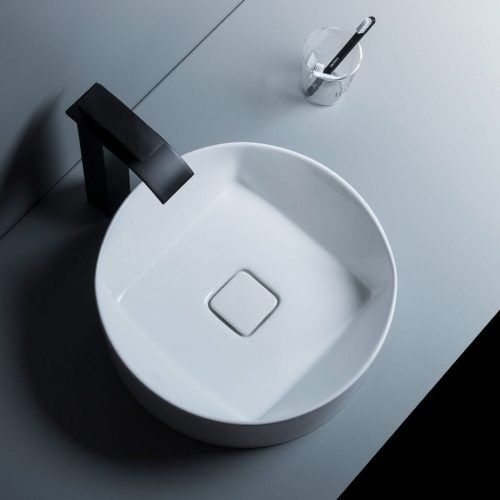
Your home cannot be complete without a functional, well-structured, and aesthetic wash basin. If you

Taking a refreshing bath plays a key role in making your day exciting and beautiful.
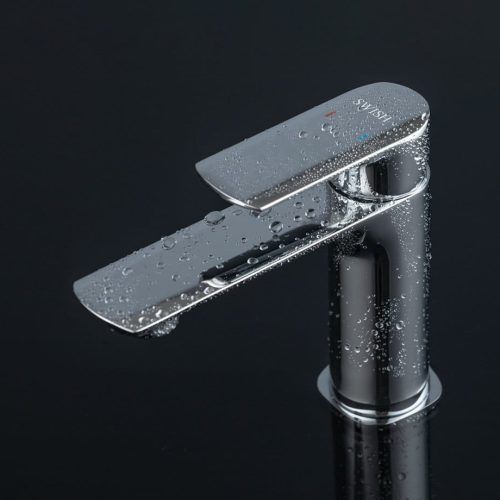
When you choose to buy a luxury bathroom faucet, there are a lot of things
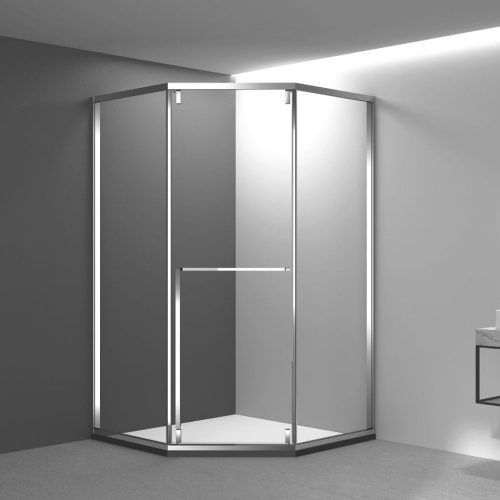
“A smart bathroom incorporates the latest and greatest in technology to increase its usability,” says
A smart kitchen is designed to increase cooking efficiency and decrease the amount of time
Luxury kitchens are becoming increasingly popular as homeowners strive to create a comfortable and stylish